More than 537 million adults worldwide live with diabetes, and roughly 1 in 4 of them will develop some degree of diabetic retinopathy, a condition where high blood sugar damages the blood vessels in the retina. Left unchecked, it is the leading cause of blindness in working-age adults. The tragedy is that it is almost entirely preventable with early detection — but there simply aren’t enough eye specialists to screen every diabetic patient every year, especially in rural and low-income regions. Artificial intelligence is closing that gap by reading retinal photographs as accurately as a trained ophthalmologist, in seconds, on a device that costs a fraction of what a full eye clinic does.
How Does AI Detect Diabetic Retinopathy in Eye Scans?
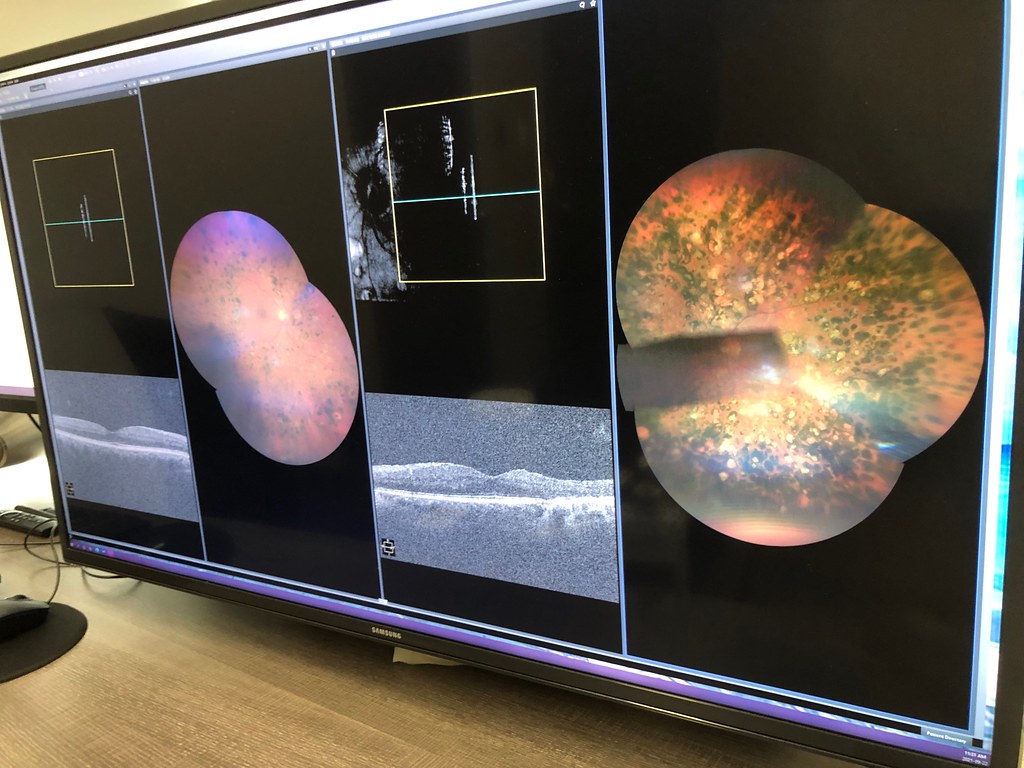
AI systems for diabetic retinopathy use convolutional neural networks (CNNs) trained on hundreds of thousands of labeled retinal fundus photographs. The model learns to recognize the visual signs of the disease — microaneurysms, hemorrhages, and abnormal blood vessel growth — the same features a human specialist looks for, but it can compare each new image against patterns learned from a dataset no single doctor could ever review in a lifetime.
A technician or nurse (no ophthalmologist required) captures a photo of the back of the patient’s eye using a fundus camera, often a portable handheld model. The image is uploaded to the AI system, which returns a result in under a minute: no diabetic retinopathy detected, or a referral recommendation for more than mild disease. This workflow means screening can happen at a general diabetes clinic, a pharmacy, or a mobile health van instead of requiring a specialist visit.
How Accurate Is AI at Diagnosing Diabetic Retinopathy?
Clinical studies show AI screening tools match or exceed human graders for catching disease that needs treatment. A 2025 systematic review and meta-analysis of 13 studies covering more than 13,000 patients found IDx-DR, the first FDA-authorized autonomous AI diagnostic system, achieved a pooled sensitivity of 95% and specificity of 91% for detecting diabetic retinopathy.
IDx-DR received FDA authorization in 2018 as the first medical device permitted to provide a screening decision without a clinician interpreting the image, a milestone for autonomous AI in medicine. Google Health’s equivalent system, called Automated Retinal Disease Assessment (ARDA), reported 91.4% sensitivity and 95.4% specificity for detecting vision-threatening diabetic retinopathy in validation studies conducted with Aravind Eye Hospital in India and Rajavithi Hospital in Thailand. Both figures fall within the range ophthalmologists consider clinically acceptable for a screening (not diagnostic) tool.
Where Is This Technology Actually Being Used?
Diabetic retinopathy AI has moved well past pilot studies into real health systems:
- India and Thailand: Google licensed its ARDA model to Forus Health and AuroLab in India and Perceptra in Thailand, targeting six million free AI-assisted screenings over ten years in underserved communities, with Thailand folding the tool into its national public hospital network.
- United States: IDx-DR (now marketed as LumineticsCore) is deployed in primary care clinics and endocrinology offices, letting a diabetic patient get screened during a routine checkup instead of a separate ophthalmology referral.
- United Kingdom: Moorfields Eye Hospital and DeepMind’s earlier research partnership demonstrated AI grading retinal OCT scans across more than 50 eye diseases with accuracy matching senior clinicians, laying groundwork for NHS screening programs.
- Rural and mobile clinics globally: Portable fundus cameras paired with cloud-based AI grading allow community health workers with minimal training to run screening days in areas with no resident eye doctor.
Why Does Early Detection Matter So Much?
Diabetic retinopathy has almost no symptoms until it is advanced enough to threaten vision permanently. According to the International Diabetes Federation, diabetes prevalence is projected to rise from 537 million to 783 million adults by 2045, a 46% increase that will push far more people into the screening pipeline than eye care systems currently have capacity for. Detecting the disease at the mild or moderate stage — when treatment through laser therapy, injections, or better blood sugar control is highly effective — is the difference between preserved eyesight and irreversible blindness.
This is also why AI in healthcare rewards the same pattern seen in other industries: predicting a problem before it becomes irreversible is almost always cheaper and more effective than treating it after the fact, whether the domain is an athlete’s joints or a patient’s retina.
What Are the Limitations of AI Retinopathy Screening?
AI screening tools are designed to answer one question: does this patient need to see an eye specialist? They are not a replacement for a full ophthalmic exam, and most are only validated for detecting diabetic retinopathy specifically, not other eye conditions that might appear in the same image. Image quality matters too — cataracts, poor pupil dilation, or a blurry photo can produce an “ungradable” result that still requires a human follow-up. Accuracy also varies by population; a model trained mostly on one ethnic group’s retinal images can perform less reliably on others, which is why regulators require local validation studies, like the ones Google ran in India and Thailand, before deployment.
There are parallels here to how AI fraud detection systems in insurance are built: a model flags cases for human review rather than making a final, unchallengeable decision, which keeps a person in the loop for anything ambiguous.
Frequently Asked Questions
Can AI diagnose diabetic retinopathy without a doctor present?
Yes, for screening purposes. IDx-DR is FDA-authorized to operate autonomously, giving a result without a clinician reviewing the image first. Patients flagged as needing further care are then referred to an ophthalmologist for full diagnosis and treatment planning.
How long does an AI eye scan for diabetic retinopathy take?
Capturing the retinal photograph takes a few minutes, and the AI analysis itself typically returns a result in under a minute, making same-visit screening possible at a general checkup.
Is AI diabetic retinopathy screening available outside hospitals?
Yes. Portable handheld fundus cameras combined with cloud-based AI grading are already used in pharmacies, mobile health vans, and rural clinics in India, Thailand, and other countries with limited access to eye specialists.
How accurate is AI compared to a human eye doctor?
Leading systems report sensitivity and specificity in the low-to-mid 90% range, comparable to or better than general ophthalmologists grading the same images, according to peer-reviewed validation studies.
Does AI replace the need for an eye doctor entirely?
No. AI systems handle the screening step — deciding who needs further care — but diagnosis, treatment, and monitoring of confirmed diabetic retinopathy still require an ophthalmologist.