A ranger station in a 2,000 square kilometre reserve might have twenty people to patrol it. Poachers know this. They also know that a foot patrol covers a predictable line and that the gap between patrols is where the killing happens. AI anti-poaching systems exist to close that gap — not by replacing rangers, but by telling them exactly where to be and when.
Over the past few years, conservation groups have quietly built one of the most practical AI deployments anywhere: hidden cameras that recognise a human silhouette in the dark, sensors that pick a chainsaw out of forest noise, and prediction models that rank a park square by square for poaching risk. This is what that technology actually does, what it has caught, and where it still falls short.
How does AI anti-poaching technology actually work?
AI anti-poaching works by putting sensors — cameras, microphones, thermal drones — into a protected area, then using machine learning to decide which of the millions of signals they capture is a threat. Instead of sending every image to a person, the system sends only the alerts that matter, usually within minutes, straight to the rangers nearest the location.
The key change is not the sensor. Camera traps have existed for decades. The change is that a device can now judge, on its own, whether it is looking at a wildebeest or a man carrying a rifle, and only spend precious satellite bandwidth on the second one.
The core insight of AI anti-poaching is simple: rangers were never short of data, they were short of attention.
Can a hidden camera really spot a poacher before the animal is killed?
Yes — and it has. The best-documented example is TrailGuard AI, a camera roughly the size of a pen developed by the conservation organisation RESOLVE with Intel, National Geographic and the Leonardo DiCaprio Foundation. It hides along the trails poachers use, runs a computer vision model on an Intel Movidius chip inside the camera itself, and transmits an alert only when it sees a person or vehicle.
According to RESOLVE, an early version of the system deployed in East Africa led to more than 30 poacher arrests and the seizure of over 1,000 kilograms of bushmeat. The system has since been trialled at larger scale in tiger reserves in central India.
Two design decisions make it work:
- On-device inference. The AI model runs inside the camera, so it does not need a mobile signal to think — only to send a confirmed alert.
- Tiny power draw. Because it only wakes and transmits for real detections, a single unit can sit in the field for a year or more without a battery change.
- Concealment. A camera the size of a pen is hard to find and hard to steal, which matters when poaching networks actively hunt for surveillance gear.
RESOLVE estimates that an elephant is poached roughly every 15 minutes — around 35,000 a year across Africa and Asia. Against numbers like that, a device that buys rangers even twenty minutes of warning changes the arithmetic.
How does AI predict where poachers will strike next?
Prediction models take years of ranger patrol records, past poaching incidents and terrain data, then forecast which parts of a park are most likely to be hit next. The best known is PAWS — Protection Assistant for Wildlife Security — developed at Harvard. It divides a park into one-kilometre squares and rates each as high, medium or low risk, then suggests patrol routes.
The results have been concrete. In its first month of deployment in Cambodia, PAWS-guided patrols found and confiscated around 1,000 snares — roughly twice the usual haul — along with 42 chainsaws, 24 motorbikes and a truck, according to Harvard SEAS.
PAWS has since been folded into SMART, the patrol-management software already used by ranger teams in protected areas worldwide. That integration matters more than the algorithm: a model that requires rangers to learn a new tool tends to die quietly, while one that appears inside the app they already open every morning gets used.
The same logic drives platforms like EarthRanger, which pull collar data, sensor alerts and patrol positions into a single live map of a reserve. It is the conservation equivalent of the AI monitoring systems dairy farmers use to spot a sick cow early — continuous observation replacing periodic inspection.
How does AI listen for poachers in a forest?
Acoustic systems place solar-powered microphones in the canopy and run audio classification models that recognise the sounds of illegal activity — a gunshot, a chainsaw, a vehicle engine, hunting dogs — and send an alert while the sound is still happening. In dense forest, where cameras see almost nothing, sound travels much further than sight.
Rainforest Connection built its early Guardian devices from recycled smartphones strapped into tree canopies. The current generation runs TinyML models directly on the device, classifying what it hears before deciding whether to spend bandwidth on an alert. Each unit covers roughly three square kilometres, according to Rainforest Connection, and the network now spans sites in Africa, Latin America and Southeast Asia.
A microphone that understands what it hears turns a forest from an unmonitored space into an alarm system.
What about drones and thermal cameras?
Night is when most poaching happens, and thermal imaging is the one sensor that works better in the dark than in daylight. Air Shepherd flies drones fitted with infrared cameras and image-processing software over reserves in southern Africa, relaying the position of any human heat signature to ground teams in real time.
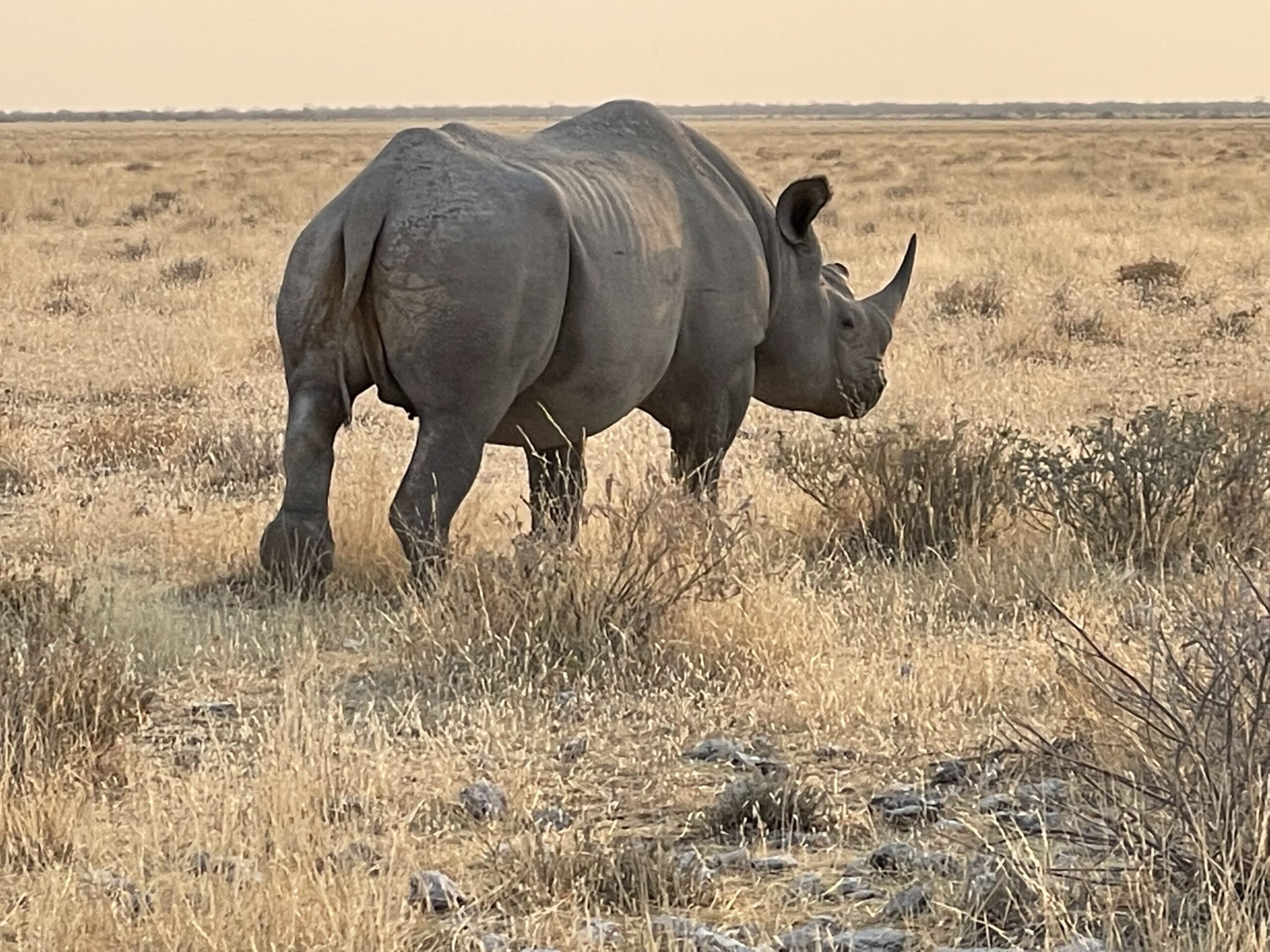
During a six-week drone patrol in the Pretoriuskop area of Kruger National Park, no rhino killings were recorded while the drones were flying — compared with nine in the preceding month. In Hwange National Park, a pilot programme was credited with cutting poaching by around 65%. Fixed thermal camera networks work on the same principle: WWF has documented thermal cameras paired with AI protecting rhinos in Kenya, flagging humans crossing a boundary at night.
Where AI anti-poaching still falls short
The technology has real limits, and conservationists are blunt about them.
- An alert is not an arrest. Every one of these systems ends with a human being walking towards an armed person in the dark. Without funded, trained, equipped ranger teams, alerts pile up unanswered.
- Connectivity is the bottleneck. Remote reserves often have no mobile coverage, forcing reliance on satellite links that are expensive and slow.
- False positives erode trust. A system that cries wolf at every passing tourist vehicle gets switched off within a month.
- Data is sensitive. Real-time location data on rhinos is exactly what a poaching syndicate would most like to steal, which makes security a conservation issue, not just an IT one.
- Maintenance is unglamorous and constant. Batteries die, elephants knock over posts, humidity kills electronics. Hardware in the field needs people to service it.
There is also a displacement problem. Heavily monitored parks push poaching towards neighbouring reserves that cannot afford the same kit — the same pattern seen in other industries where AI monitoring raises the standard at well-funded operations first and leaves smaller players behind.
What comes next
The direction of travel is towards cheaper hardware and smarter edge models. As TinyML models shrink, more of the decision-making moves onto the device, cutting both bandwidth costs and response times. Multi-sensor fusion — combining an acoustic alert with a camera confirmation before waking a ranger — is the obvious next step, and the one most likely to solve the false-positive problem.
For anyone weighing whether AI in conservation is hype: the honest answer is that it does not stop poaching, it compresses response time. In a field where the difference between a live rhino and a dead one is often forty minutes, that turns out to be most of the battle.
Frequently Asked Questions
What is AI anti-poaching?
AI anti-poaching is the use of machine learning with field sensors — cameras, microphones, thermal drones and GPS collars — to automatically detect signs of illegal hunting and alert rangers in real time. The AI’s job is to filter millions of harmless signals down to the few that require a human response.
Does AI actually reduce poaching?
There is credible field evidence that it helps. Documented results include more than 30 arrests linked to TrailGuard AI cameras in East Africa, roughly double the usual snare seizures during PAWS-guided patrols in Cambodia, and a reported 65% drop in poaching during a drone pilot in Hwange National Park. These are programme-level results, not controlled trials, so the numbers should be read as encouraging rather than definitive.
How do AI cameras tell a poacher from an animal?
They run computer vision models trained on large sets of labelled images to classify what triggered the sensor — human, vehicle or wildlife. Modern units run this model on a chip inside the camera, so only confirmed human and vehicle detections are transmitted, saving power and bandwidth.
Can small reserves afford this technology?
Increasingly, yes. Solar-powered acoustic sensors and pen-sized AI cameras cost a fraction of a helicopter patrol, and platforms like SMART and EarthRanger are free or low-cost to conservation organisations. The larger expense is usually connectivity and the ranger capacity to act on alerts.
Is AI replacing rangers?
No. Every deployed system is designed to direct rangers, not substitute for them. AI decides where to look; people still make the interception, the arrest and the community relationships that prevent poaching in the first place.