Fake videos made by AI are getting harder to spot. A new answer from UCLA is odd but clever: use light to check videos for fakes. In tests, this setup judged videos with about 98% accuracy. This article explains how it works, what the numbers mean, and what it will not do for you.
Quick answer: A light-based deepfake detector is a machine that sends video information through beams of light and special glass-like layers. The light does the heavy math, so many videos can be checked at the same time.
What Did UCLA Researchers Build?
Researchers at the University of California, Los Angeles built a “hybrid digital-optical” processor. That means part of it is a normal computer and part of it uses light. The team was led by Professor Aydogan Ozcan, with Parnian Ghapandar Kashani and Dr. Shiqi Chen. Their paper appeared in the journal eLight and is also on arXiv.
The goal is simple. Websites receive millions of videos. Checking each one on a normal chip takes time and a lot of electricity. This design checks many at once.
How Does a Light-Based Deepfake Detector Work?
It turns each video into a pattern of light, passes that light through special layers, and reads the result as a “real” or “fake” score. No normal chip does the hardest step.
Here is the process in plain steps:
- A small, simple computer program pulls key clues out of each video. These clues include how the picture looks and how it changes from frame to frame.
- Those clues become a pattern shown on a device called a spatial light modulator — a tiny screen that shapes a beam of light.
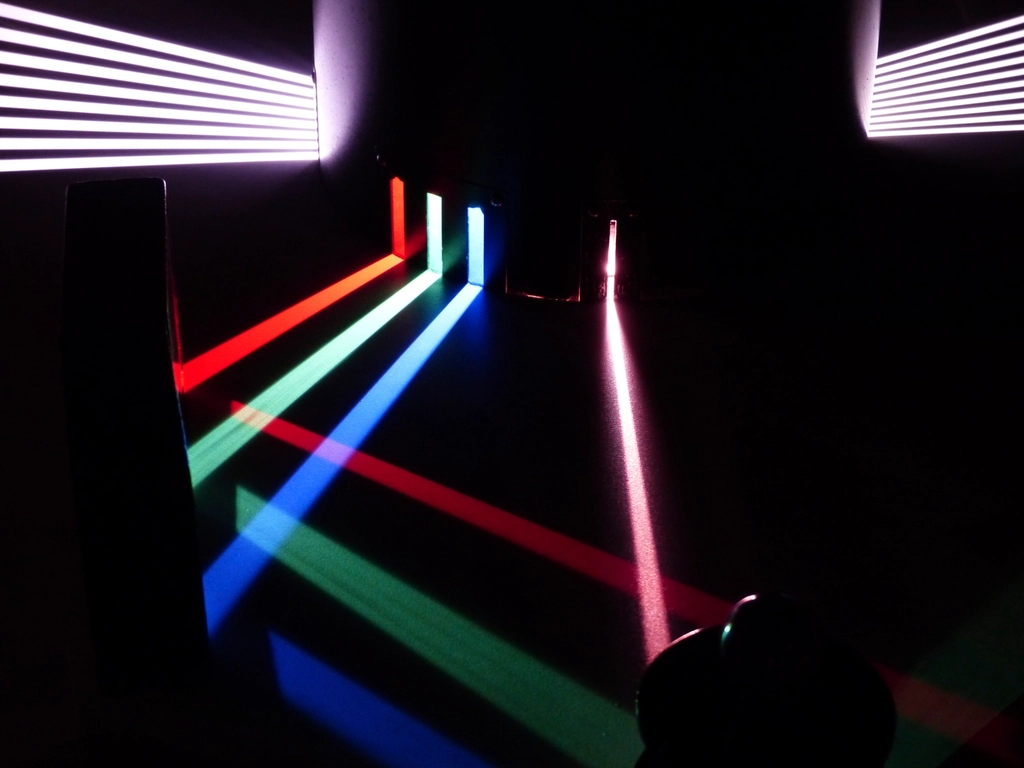
- The light passes through layers that bend it in carefully planned ways. This is called diffraction, the same effect that makes rainbow patterns on a CD.
- Two light sensors at the end measure the result. One side stronger means “real.” The other side stronger means “fake.”
The layers are passive. They do not need power while checking. The bending of light does the math for free.
How Accurate Is the AI Deepfake Detector?
In the UCLA test, the system was right about 97.79% of the time when it checked 15 videos at once. The test used videos from a well-known research set called Celeb-DF, which holds real and fake celebrity clips.
According to ScienceDaily’s report on the study, the details were:
- Overall accuracy: 97.79% with 15 videos at once.
- Catching fakes: 99.86% of fake videos were flagged. Only about 1 in 700 fakes slipped through.
- Not blaming real videos: 95.72% of real videos were correctly called real. So about 4 in 100 real videos were wrongly flagged.
- More videos at once: With 18 videos together, accuracy was still 96.13%.
- Newer AI video: On videos made by Google’s Veo 3, accuracy was 94.80% after a small amount of extra training.
The system also kept working when videos were blurry, noisy or squeezed by compression, which happens whenever you upload a clip to social media.
Why Use Light Instead of a Normal Chip?
Light can carry many signals through the same space at the same time, and it needs very little energy to do math as it passes through glass-like layers.
A normal AI model reads videos one after another, or in small batches. Each step uses electricity. As fakes grow in number, this gets expensive. A light-based first check could sort the pile cheaply. Only the suspicious videos would move on to heavier, slower checks.
The researchers also say the design is harder to attack. The key settings are built into physical hardware. An attacker cannot easily measure or copy them, the way they could copy a software file.
Will This Help You Spot Fakes on Your Phone?
Not yet, and probably not directly. This is lab equipment, not an app. The researchers describe it as “a highly sensitive first stage of a larger detection system.” Think of it as an airport scanner that picks out bags for a closer look.
Some limits are important:
- It has not been tested on every AI video tool. New tools appear all the time.
- A 95.72% score on real videos means some honest videos would be flagged for review.
- It still needs a good front-end program and a bigger system around it.
So for now, your own habits matter more. Our guide on how to check if a video call is an AI avatar and our piece on spotting AI-generated doctors on TikTok give simple checks you can use today.
Simple Habits That Still Work
- Pause before sharing a shocking clip. Ask who first posted it.
- Search for the same story on trusted news sites.
- Look for odd blinking, strange mouth shapes or blurry edges near the face.
- For money requests, call the person back on a number you already know.
Frequently Asked Questions
Can AI really detect deepfake videos?
Yes, but not perfectly. The UCLA light-based system got about 98% right on one test set. Other AI-made videos are harder, and no detector catches everything.
Does the light-based detector work on my phone?
No. It is lab hardware with lasers and special optical parts. It is built for big platforms that must check huge numbers of videos, not for personal use.
What is a deepfake?
A deepfake is a video, image or audio clip made or changed by AI to show someone doing or saying something they never did.
Why use light instead of a normal computer chip?
Light can carry many videos through the same device at once, and the main math happens as light passes through special layers. This can save time and electricity.
Can a deepfake detector be tricked?
Yes. Any detector can fall behind new fake-making tools. The UCLA team says its hardware design is harder for attackers to copy, but it has not been tested on every AI video tool.