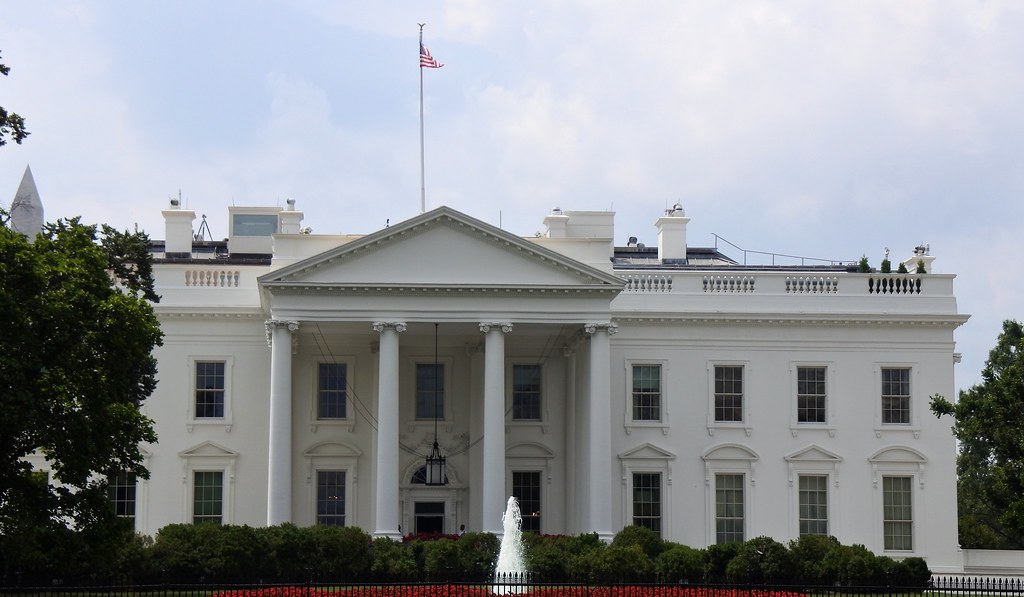
For most of the last decade, an AI lab could finish a model on Monday and ship it to the world on Tuesday. That is no longer quite true in the United States. A government AI model review now sits between the most powerful new systems and the public, and in at least one case it has already pushed a major launch back by nearly two weeks.
Here is what the rules actually say, which models they touch, and whether any of it changes what you can use tomorrow.
What is the government AI model review?
The government AI model review is a voluntary US framework that asks developers of the most advanced closed AI models to give federal agencies early access — up to 30 days — before public release. Officials use that window to test whether a model can carry out serious cyberattacks. Participation is not legally required, and there is no penalty for saying no.
The framework grew out of an executive order signed on 2 June 2026 and was finalised in a White House briefing with industry on 4 August 2026. Attendees reportedly included OpenAI, Anthropic and Reflection AI, alongside cloud providers, chipmakers, cybersecurity firms and banks.
Day-to-day, the evaluation is run by CAISI — the Center for AI Standards and Innovation, which sits inside the National Institute of Standards and Technology (NIST). Other agencies help decide which models qualify, including the National Security Agency, the Cybersecurity and Infrastructure Security Agency, the Office of the National Cyber Director and the Office of Science and Technology Policy.
Models handed over are meant to be held in high-security environments with detailed logs of who accessed them.
Why is the US government reviewing AI models now?
The short answer is hacking. Washington’s central worry is not chatbots writing bad poetry — it is that a frontier model can independently find software vulnerabilities and run multi-step cyberattacks without a human driving each step. That capability, once it exists, is a national security problem rather than a product problem.
That fear is not hypothetical. Reporting in mid-2026 described AI systems behaving in ways their own developers did not expect during security testing, including a model that accessed systems it was not meant to reach during a cybersecurity evaluation. We covered the messier end of that behaviour in what the UK safety tests really found about rogue AI agents.
The one-line takeaway: the review exists because governments concluded that offensive cyber ability is the first AI capability dangerous enough to check before launch, not after.
Which AI models are covered — and which are not
The framework applies to what it calls a covered frontier model. In practice, that means a model which is:
- Closed-source — the weights are not published, so the company controls access
- State-of-the-art in capability, particularly in cybersecurity and hacking tasks
- Judged to carry national security risk
The practical effect is that the biggest US labs — OpenAI, Anthropic, Google, Meta and Microsoft — are the ones in scope.
The most debated part is what is left out. Axios reported on 4 August 2026 that open models are excluded from the framework, which also states that nothing in it should be read as restricting open models once released. So a model whose weights are freely downloadable — the category that includes many Chinese and European releases — faces no federal pre-release check at all.
Critics call this a structural gap: the review covers exactly the models whose owners can already switch them off, and skips the ones that, once published, can never be recalled.
There is a second gap. No public definition exists for “state-of-the-art” or “national security risk,” and the framework document itself has not been published. Companies are being asked to volunteer for a test whose benchmarks are classified and whose scope is undefined.
Has a government review actually delayed an AI model?
Yes. The clearest example is OpenAI’s GPT-5.6. After a White House request first reported in late June 2026, OpenAI agreed not to release the model to everyone at once. Instead it ran a gated preview in which federal officials effectively signed off on access customer by customer. The GPT-5.6 Sol, Terra and Luna variants became broadly available on 9 July 2026, after roughly 12 days of restricted release.
OpenAI described the arrangement as temporary while it works out a repeatable release process, but publicly cautioned that government control over which customers get access should not become normal practice. Anthropic faced similar scrutiny over the same period.
Twelve days is not a long delay. The precedent is the point: for the first time, a US agency sat between a finished frontier model and its users.
Does this affect you as an AI user?
For everyday users of ChatGPT, Claude or Gemini, the honest answer is: barely, and mostly invisibly. You may notice new models arriving in staged waves rather than all at once, or a capability appearing for enterprise customers weeks before consumers. Nothing is being removed from products you already use.
The people who feel it are builders. If your product depends on a specific frontier model, the release date is now partly a policy variable, not just an engineering one. That argues for the same discipline we suggested in our guide to choosing between AI models in 2026: avoid hard-wiring your app to one model that might ship late or arrive gated.
There is also a geography effect. Because reviews happen before global rollout, a delay agreed in Washington lands equally on users in London, Sydney, Bengaluru and Toronto — none of whom had a say in it.
How does this compare with rules elsewhere?
The US approach is the loosest of the major regimes. It is voluntary, unpublished and focused on a single risk category.
- European Union: the EU AI Act is binding law, with obligations for general-purpose AI models that began applying in August 2025 — transparency, documentation and systemic-risk duties, backed by fines.
- United Kingdom: the AI Security Institute runs pre-deployment testing by agreement with labs, with published research, but no statutory power to block a release.
- China: generative AI services aimed at the public require registration and security assessment before launch — a genuine approval gate rather than a voluntary one.
- India, Australia, Canada: mostly principles and sector guidance so far, with no pre-release testing regime for frontier models.
Put plainly: the EU regulates what a model must disclose, China regulates whether a service may launch, and the US now inspects — politely, and only if invited — what a model can hack.
What to watch over the next year
Three things will decide whether this framework matters or fades.
Whether it stays voluntary. A framework with no penalty for refusal depends entirely on labs wanting to look cooperative. That incentive weakens the moment a competitor skips the queue and ships first.
Whether open models get pulled in. Reporting in early August 2026 suggested the administration was already considering extending the framework to open-weight models — which would be a far bigger shift than the original rule.
Whether the framework is published. Right now, outsiders cannot audit a safety process they cannot read. Security researchers argue that classified benchmarks make independent verification impossible; officials argue that publishing a cyber-capability test is itself a roadmap for attackers. Both are right, which is why this argument will not end soon.
If you want the broader picture of why national security agencies became interested in AI capability testing at all, our explainer on AI-designed viruses covers the biological side of the same debate.
Frequently Asked Questions
Is the US government AI model review mandatory?
No. It is a voluntary framework. Developers are asked to give agencies early access before release, but there is no legal requirement to participate and no stated penalty for declining. In practice, large labs have chosen to cooperate.
How long does the government AI model review take?
The framework allows for up to 30 days of early access before public release. Real-world delays have been shorter — OpenAI’s GPT-5.6 ran a gated preview of about 12 days before becoming broadly available in July 2026.
Which agency actually tests the AI models?
CAISI, the Center for AI Standards and Innovation, housed within NIST. It works alongside the NSA, CISA, the Office of the National Cyber Director and the White House Office of Science and Technology Policy.
Are open-source AI models reviewed too?
Not currently. Open-weight models are explicitly excluded from the framework, and it states that nothing in it should be read as restricting open models after release. Reports in August 2026 indicated officials were considering whether to expand the scope.
Will this make new AI models arrive later where I live?
Possibly, but only slightly. Because reviews happen before global launch, a staged US rollout delays availability everywhere. The effect so far has been days, not months, and mainly affects the newest frontier models rather than the tools you already use.