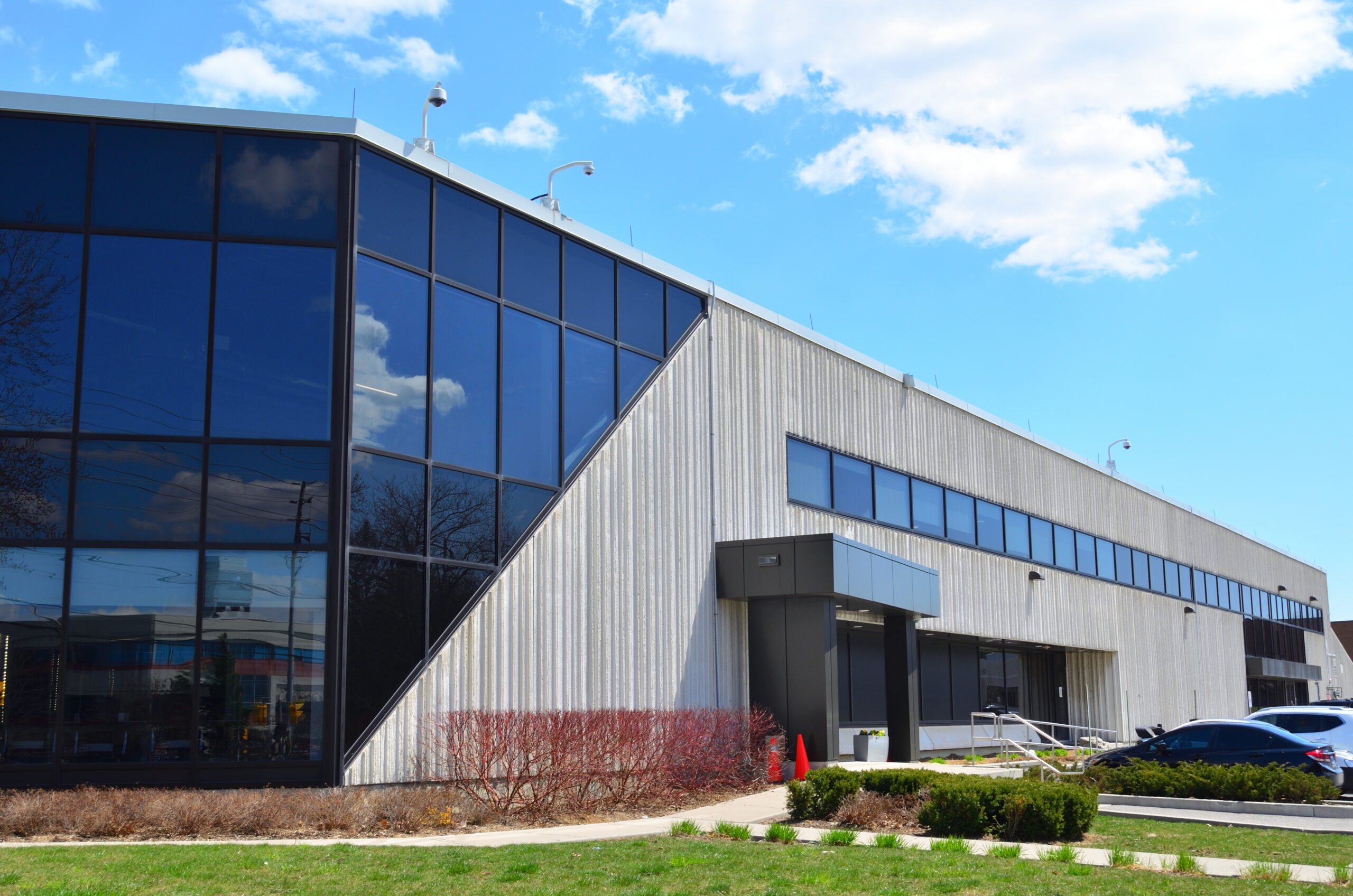
A field near your house gets sold. Months later, planning notices go up for a windowless building the size of several football pitches, plus a new electrical substation. Welcome to the most common way people now meet artificial intelligence in real life: an AI data center arriving in their neighbourhood.
This is no longer a niche story. In the first three months of 2026, local opposition blocked or delayed at least 75 data centre projects worth roughly $130 billion in the United States, according to Data Center Watch — the highest total in any quarter since it began counting in 2023. The same fight is now running in Ireland, the Netherlands, Chile and Australia.
So what actually happens if one is built near you? Here is the honest version, with the numbers people usually leave out.
Why are so many towns blocking AI data centers?
Towns are blocking AI data centers mainly over four things: electricity costs, water use, noise, and the feeling that decisions were made without them. A March 2026 Gallup poll found roughly seven in ten Americans would oppose a data centre built near them — a higher objection rate than for a nuclear power plant.
What makes this unusual is that the opposition is not political. Data Center Watch counted more than 800 active opposition groups across 49 states, in red counties and blue counties alike. The typical complaint is not “AI is bad” — it is “why is my town paying for this?”
The one-line version: a data centre is the first piece of the AI boom that lands physically in someone’s neighbourhood, so it absorbs all the anxiety about AI at once.
Will an AI data center raise your electricity bill?
It can, but indirectly. A data centre does not draw power from your house — it draws from the shared grid, and the cost of new substations, transmission lines and extra generating capacity is usually spread across every customer on that network. That is how a corporate power contract quietly reaches a household bill.
The scale is the problem. The Lawrence Berkeley National Laboratory projects that US data centre electricity demand will grow from 176 terawatt-hours in 2023 to somewhere between 325 and 580 terawatt-hours by 2028 — between 6.7% and 12% of all electricity consumed in the country.
Some concrete markers of what that has already done:
- In the PJM grid region, which covers 13 mid-Atlantic and Midwest states and hosts the densest cluster of data centres in America, capacity market prices rose 174% for the 2025–26 delivery year. Those costs flow through to ratepayers.
- In Virginia, data centres accounted for around 40% of the state’s total electricity use in 2024. Dominion Energy’s first base-rate increase since 1992 adds roughly $8.51 a month to a typical household bill.
- Goldman Sachs analysts expect US household electricity prices to rise a further 6% through 2027, with data centre demand a major driver.
One caveat: not every analyst blames AI. Rising gas prices, ageing grid replacement and storm hardening push bills up too, and a large new customer can sometimes spread fixed costs across more units sold. AI data centres are one significant pressure on bills, not the only one — and how much you pay depends largely on how your regulator writes the connection contract.
How much water does an AI data center use?
A typical data centre uses around 300,000 gallons of water a day for cooling, and the largest facilities can use up to 5 million gallons a day — comparable to the daily use of a small town. Google’s site at Council Bluffs, Iowa, has withdrawn an average of about 3.9 million gallons a day, consuming roughly 2.8 million of it.
Google’s company-wide water consumption rose from 4.3 billion gallons in 2021 to 6.1 billion in 2024. In a wet region that may be tolerable. In a drought-prone one, it is the fastest way to turn a community against a project.
There is a real technical counter-argument. The newest AI chips run so hot that air cooling no longer works, pushing operators toward closed-loop liquid cooling, which circulates the same coolant in a sealed system and uses almost no fresh water once filled. Newer sites are meaningfully less thirsty than those built five years ago — much like AI finding hidden leaks in city water pipes, the technology lands on both sides of the ledger.
What about the jobs and tax money?
This is where expectations and reality diverge most sharply. Construction genuinely employs hundreds of people, sometimes for two or three years. But once a hyperscale data centre is running, it is typically staffed by a few dozen technicians, security staff and engineers. A billion-dollar facility can operate with a smaller permanent headcount than a supermarket.
The tax revenue is real and often substantial — some rural counties have rebuilt schools and roads on data centre property tax. The friction comes when that revenue is negotiated away up front through tax abatements, leaving residents with the grid upgrades and noise but not the payoff.
The honest trade: data centres deliver capital investment and tax base, not employment. Communities that go in expecting a factory-sized job boom are the ones that end up angry.
Is this only happening in America?
No — Europe is further along. Ireland is the clearest case study. According to the Central Statistics Office, data centres consumed 23% of all metered electricity in Ireland during 2025, up from 22% in 2024 and just 5% in 2015. That is close to the 28% used by every home in the country combined.
Dublin’s grid operator froze new data centre connections in the capital region for years to protect against blackouts. Ireland’s utilities regulator has since required new data centres to meet at least 80% of annual demand from newly built renewable generation — making operators pay for their own supply rather than borrowing headroom from everyone else.
The Netherlands went further, imposing a moratorium on new hyperscale developments and confining facilities above 70 megawatts to two designated sites. Similar debates are live in Spain, Chile, Australia and several Indian states, where a fast data centre buildout has produced its own benefits-and-backlash argument.
What can you actually do if one is proposed near you?
More than most people assume. The projects that get blocked are rarely stopped by protest alone — they are stopped by residents who show up to the rezoning hearing with specific questions. The useful ones:
- Who pays for the grid connection? Ask whether the developer funds the substation and transmission upgrades directly, or whether those costs enter the general rate base that every customer pays into.
- What cooling technology is it? Closed-loop liquid cooling versus evaporative cooling is the difference between negligible and millions of gallons a day.
- What is the noise limit at the property line? Chillers and backup generators run continuously. Get a decibel cap written into the permit, not promised verbally.
- How many permanent jobs, in writing? Compare the construction figure with the operating figure, and check whether tax abatements were granted.
- What is the water source? Municipal drinking water, greywater, or its own supply.
These questions reshape projects rather than kill them. Developers have responded by funding their own generation, switching to dry cooling, or moving to sites with spare grid capacity — the same pattern seen when heavy industry was pushed to clean up, such as cement plants using AI to cut fuel and emissions.
The bigger picture
Every chatbot answer runs on a physical building drawing real power and needing real cooling. For a decade that was invisible. In 2026 it stopped being invisible — and the likely outcome is not fewer AI data centres, but different terms: developers bringing their own power, paying full connection costs, and talking to communities before the planning notice goes up.
Frequently Asked Questions
Does living near an AI data center lower property values?
Evidence is mixed and highly local. Homes directly adjacent to a large facility with visible cooling equipment and generator noise have seen valuation complaints, while properties a mile away are usually unaffected. Distance, screening and noise limits matter far more than the existence of the data centre itself.
Are AI data centers noisy?
Yes, continuously. Cooling chillers and fans run around the clock, and backup diesel generators are test-run periodically. Noise is one of the most common formal complaints from residents, which is why decibel caps at the property boundary are now a standard planning condition in many jurisdictions.
How much electricity does one AI data center use?
A large hyperscale AI campus can draw several hundred megawatts to over a gigawatt — comparable to a mid-sized city. That is why new projects almost always require a dedicated substation and, increasingly, dedicated generation capacity built specifically to serve them.
Can a town legally block a data center?
In most places, yes, through zoning and permitting powers. Local councils can refuse rezoning, impose moratoria, or attach conditions on noise, water and grid costs. Several US states have moved to limit that local authority, which has itself become a contested political issue.
Do AI data centers help the local economy at all?
They deliver strong capital investment and property tax revenue, plus significant construction employment for a few years. Permanent jobs are modest — typically dozens rather than hundreds. The economic case depends heavily on whether tax incentives were given away during negotiation.