
On September 4, 2026, Tesla started giving paid rides in Austin, Texas, in a car called the Cybercab. It has no steering wheel. No brake pedal. No gas pedal. No mirrors. Just two seats and software. Within hours, federal safety regulators opened an investigation. That raises an obvious question: who approved a self-driving car with no steering wheel in the first place?
The answer surprises most people. In the United States, nobody approved it in advance. Tesla approved it itself.
What actually happened in Austin
Tesla put a small number of two-seater Cybercabs on public streets in Austin and began charging for rides. The National Highway Traffic Safety Administration (NHTSA) — the US government agency that writes and enforces car safety rules — opened an audit query numbered AQ26002 covering an estimated 1,000 of these vehicles.
NHTSA said it is examining “the process and technical data on which Tesla relied when certifying the Cybercab and related issues.” In plain words: the agency wants to see Tesla’s homework.
The specific worry is written into the agency’s paperwork. NHTSA will look at “the extent to which Tesla’s certification depended on determinations that certain FMVSS are inapplicable to the Cybercab.” FMVSS stands for Federal Motor Vehicle Safety Standards — the list of rules every car sold in America must meet.
Tesla decided some of those rules do not apply to its car. NHTSA is checking whether that decision was correct.
The agency put it this way: “NHTSA fully supports the safe development and deployment of automated vehicles. But as the federal regulator, we need to ensure that all of our laws are followed.”
The takeaway: an investigation is not a finding of wrongdoing. It is a demand that the company prove its car is legal.
Who approves a self-driving car with no steering wheel?
In the United States, no government agency inspects and approves a new car before it goes on sale. Carmakers “self-certify” — they test their own vehicles, declare that the vehicle meets federal safety rules, and put it on the road. NHTSA can investigate afterwards, and it can force a recall if it finds a problem.
This system is decades old and it works reasonably well for normal cars. A carmaker knows a seatbelt must survive a certain pull test. It runs the test, keeps the records, and moves on.
A self-driving car with no steering wheel breaks that neat arrangement. Many safety rules were written assuming a human sits behind a wheel. There are rules about how far the steering column can move in a crash. Rules about mirrors. Rules about where the brake pedal sits.
If your car has none of those parts, what do you certify? Tesla’s answer was that several of those rules simply do not apply. That is a legal judgement the company made about itself. It is exactly the judgement NHTSA is now auditing.
Other agencies matter too. States and cities decide who can run a taxi service on their roads. Texas has been friendly to driverless testing. California is much stricter. The same car can be legal in one state and blocked in another.
What is self-certification, and why does it matter now?
Self-certification means the company that builds the car is also the company that declares it safe. No government inspector signs off first. Regulators step in later, using crash reports, complaints and audits. Europe works the opposite way: a car must be approved by an authority before it can be sold.
For 60 years that difference barely mattered to ordinary drivers. Now it does. When the “driver” is software, self-certification means a company is grading its own driving test.
This is the same tension we wrote about in Does the Government Review AI Models Before Release? — powerful AI systems reaching the public before anyone outside the company has checked them.
Zoox took the other road and asked permission
There is a second, slower path, and a competitor used it.
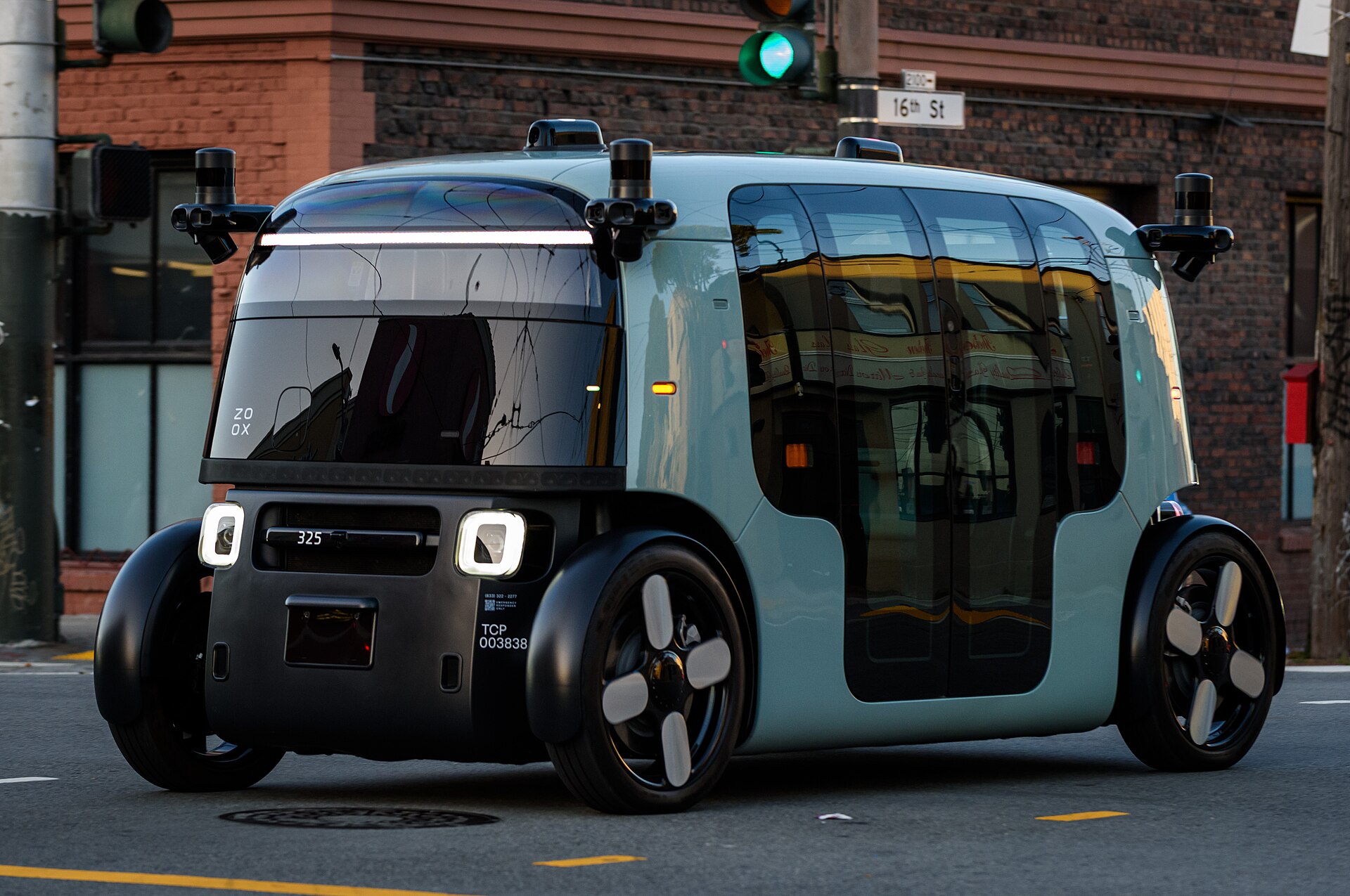
Zoox, owned by Amazon, built a four-seat pod with no steering wheel and no pedals. Instead of declaring the rules inapplicable, Zoox asked NHTSA for a formal exemption under 49 CFR Part 555 — the section of federal law that lets the agency temporarily excuse a vehicle from certain standards while new safety technology is tested.
On July 30, 2026, Zoox received the first commercial Part 555 exemption ever granted for a purpose-built robotaxi. The permission runs from July 31, 2026 to July 31, 2028 and caps Zoox at 2,500 vehicles per year. Zoox began charging for rides in Las Vegas in August 2026.
The contrast is the whole story. Zoox asked and was told yes, with limits and an expiry date. Tesla decided for itself and started selling rides. Zoox also waited years for the answer: it self-certified a robotaxi back in 2022, NHTSA opened an audit query in 2023, and full commercial approval only arrived in 2026.
The takeaway: two companies built nearly the same kind of vehicle and used two completely different legal routes to put it on the street.
Is it safe to ride in a car with no steering wheel?
Honestly, nobody outside these companies can say for sure. The vehicles may well be safer than human drivers. The problem is that the public data needed to prove it does not exist yet.
The Insurance Institute for Highway Safety has pointed out the gap. The crash data companies must report to the government is limited. Most operators do not publish how many miles their vehicles drove. Without miles, you cannot work out a crash rate — and a crash rate is the only fair way to compare a robot driver with a human one.
There is also no agreed standard for which incidents must be reported at all. One company might log every hard brake. Another might log only collisions. Their safety records then look very different for reasons that have nothing to do with safety.
So when a company says its robotaxi has a spotless record, the fair response is: measured how, over how many miles, and checked by whom?
What this means for you
If you live in Austin, Las Vegas, Phoenix or San Francisco, you may be offered one of these rides soon. A few practical things are worth knowing.
- You cannot take over. There is no wheel to grab. If something feels wrong, your only options are the in-car support button and the app.
- Insurance is mostly the company’s problem. With no human driver, fault shifts toward the carmaker and the software maker. But this area of law is still being written, and few court cases have settled it.
- Legal status can change fast. An audit query can end quietly, or it can pause a service. Zoox’s earlier investigation slowed its launch by years.
- Different city, different rules. A service that is legal in Texas may not be legal where you live.
None of this means you should refuse the ride. It means knowing that “approved” and “legal for now” are not the same thing. The wider pattern — AI reaching the public faster than the checks around it — is the same one we looked at in Rogue AI Agents: What the UK Safety Tests Really Found.
You can read the federal safety standards on the NHTSA website, and the crash-data problem is covered by the Insurance Institute for Highway Safety.
Frequently Asked Questions
Is it legal to drive a car with no steering wheel in the US?
It can be, in two ways. A company can self-certify that the vehicle meets federal safety standards, or it can win a Part 555 exemption from NHTSA. Tesla used the first route for the Cybercab. Zoox used the second.
What is an NHTSA audit query?
It is a formal investigation into how a carmaker decided its vehicle meets federal rules. NHTSA asks for engineering records and test data. It is not a recall and not a finding of fault, but it can lead to either.
Who is at fault if a driverless taxi crashes?
With no human driver, responsibility shifts toward the company that built the vehicle and wrote the software. The exact rules vary by state, and very few cases have been decided in court, so this is still unsettled law.
How many Cybercabs are being investigated?
NHTSA’s audit query AQ26002 covers an estimated 1,000 Tesla Cybercab vehicles. Tesla deployed a small number of them in Austin, Texas, and said it plans to expand to more vehicles and more cities.
Are robotaxis safer than human drivers?
There is not enough public data to answer this properly. Operators are not required to publish how many miles they drive, so outside experts cannot calculate a crash rate and compare it fairly with human drivers.
Cover photo: a Zoox robotaxi in San Francisco, by 9yz via Wikimedia Commons, CC BY 4.0.

